
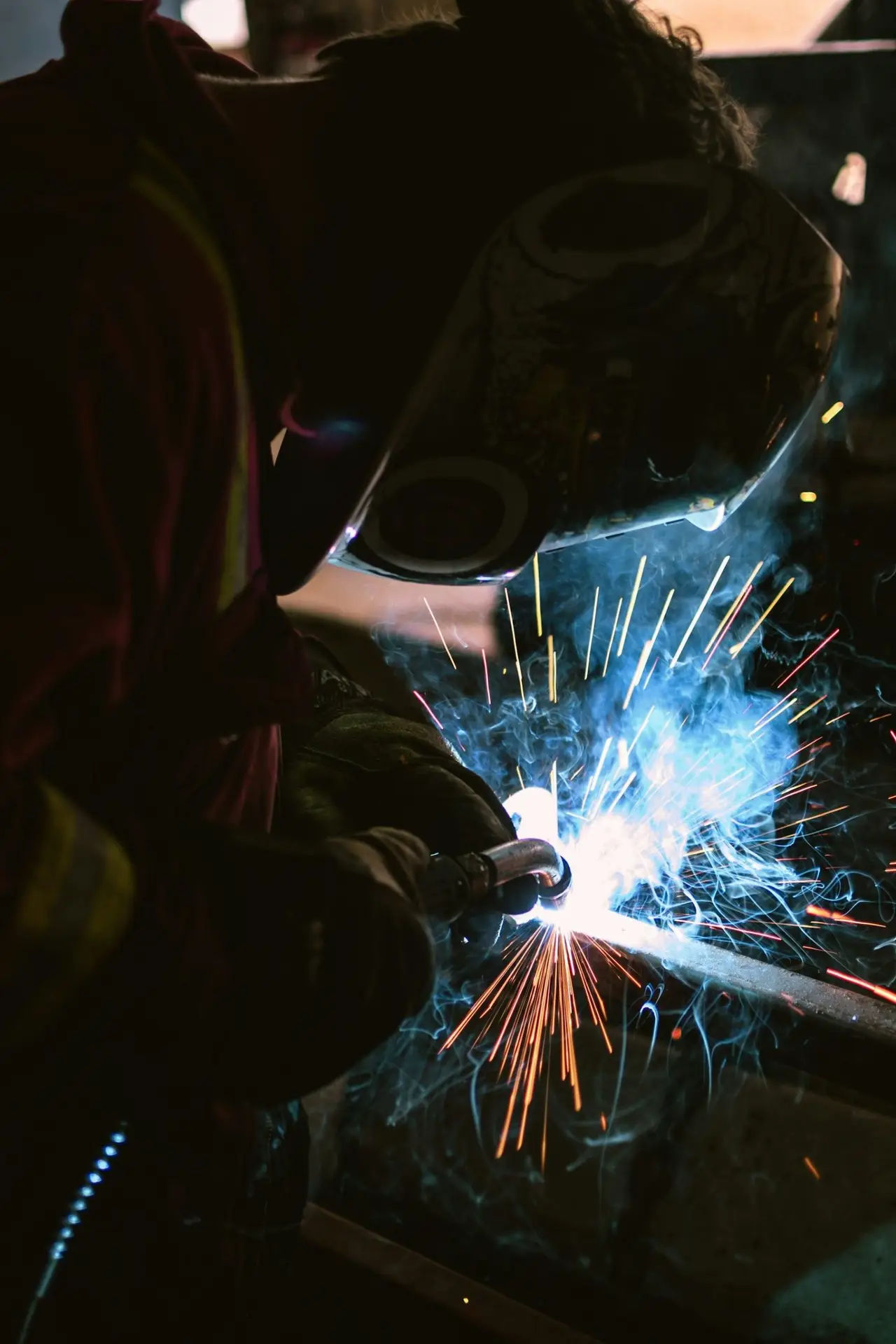
The short answer: AWS D1.1, the Structural Welding Code for steel, is the American Welding Society standard most U.S. building projects use for welding structural steel. It sets the rules for welding procedures, welder qualification, workmanship and inspection. If your drawings say welding per AWS D1.1, every structural weld must be made and accepted to that code.
AWS D1.1, the Structural Welding Code – Steel, is the standard most U.S. structural steel projects use to define how welds are designed, made, and inspected. Published by the American Welding Society, it sets the rules for welding procedures, welder qualification, workmanship, and inspection on carbon and low-alloy steel structures. If your engineer’s drawings say “welding per AWS D1.1,” every structural weld on the job is expected to meet it.
What AWS D1.1 covers
The code is long, but for owners and general contractors it boils down to four things:
- Welding procedures (WPS). Every structural weld is made according to a written Welding Procedure Specification that defines the process, filler metal, joint design, preheat, and settings. Many common joints are “prequalified,” meaning the code already accepts them if the listed limits are followed.
- Welder qualification. Welders must pass qualification tests for the processes and positions they weld in, and those qualifications have to stay current.
- Workmanship and fabrication. Fit-up tolerances, joint preparation, base-metal condition, and acceptable weld profiles are all spelled out.
- Inspection and acceptance. The code defines what inspectors look for and which discontinuities — cracks, lack of fusion, excessive undercut, porosity — are rejectable.
Where D1.1 applies — and where it doesn’t
D1.1 applies to structural steel such as beams, columns, braces, plates, and connections — typically material 1/8 inch and thicker. Thin sheet steel is covered by AWS D1.3, reinforcing bar by D1.4, and bridges by D1.5. Stainless and aluminum have their own codes. Your engineer’s general notes will say which code governs.
Why it matters on your project
Building codes adopted by Texas cities reference structural steel standards that in turn call for AWS D1.1. In practice that means:
- The engineer designs connections assuming welds are made to D1.1.
- Commercial projects often require special inspection of structural welding, and inspectors judge welds against D1.1 acceptance criteria.
- Rejected welds have to be repaired and re-inspected, which costs time and money — so getting it right the first time matters.
Questions to ask your welding contractor
- Which welding procedures will you use on this job, and are they prequalified or qualified by testing?
- Are the welders qualified for the processes and positions this project requires?
- How will you coordinate with the special inspector?
- How do you handle field welds that need preheat or are in difficult positions?
Short version: AWS D1.1 is the rulebook that makes structural welds predictable. When everyone on the job works to it, inspections go smoothly and the building performs the way the engineer designed it.
How we approach D1.1 work
On our structural steel welding projects we work from the engineer’s connection details, prepare joints to the specified procedure, and plan sequencing so inspectors can verify welds as they’re completed. If you’re planning a project in Dallas, Fort Worth, or anywhere in the Metroplex, send us your drawings for a free estimate.
A D1.1 paperwork checklist for DFW owners and GCs
A lot of D1.1 trouble on Metroplex jobs isn’t bad welding. It’s missing paperwork that turns up when the special inspector or the building official asks for it. On a commercial project in Dallas, Fort Worth, Plano or Frisco, collect these documents before the first weld is made.
Before steel arrives
- Welding Procedure Specifications. One for each joint type and process on the job, noting whether it is prequalified or qualified by testing.
- Welder qualification records. Current records for every welder on the project, matching the processes and positions in the procedures.
- Filler metal data. Manufacturer product data or certificates for the electrodes and wire, matched to the steel grade on the drawings.
- Approved shop drawings. The weld symbols should agree with the engineer’s connection details.
During the work
- Inspection reports. Keep copies of the inspector’s reports and any nonconformance notices.
- Repair records. Note how each rejected weld was repaired and when it was re-inspected.
Residential projects
Houses built under the International Residential Code usually don’t trigger special inspection, but the engineer may still call out D1.1 for a steel beam or moment frame. The same basics apply: a qualified welder, a sound procedure and welds that match the drawings.
Ask for this package when you compare bids for structural steel welding. A contractor who works to D1.1 should be able to produce it without delay, and the inspector’s first visit can then focus on the welds instead of the paperwork.
Key takeaways
- Look for "welding per AWS D1.1" in the structural general notes; that line makes the code part of the job.
- Every structural weld follows a written WPS, and each welder must be qualified for the process and position.
- Inspectors judge welds against D1.1 acceptance criteria, and welds that miss them are repaired and re-inspected.
- Ask for procedures and welder qualification records before steel work starts, not after an inspection fails.
Frequently asked questions
Do welders need a license in Texas?
Texas does not have a statewide license for structural welders the way it does for electricians and plumbers. Instead, welders qualify by passing tests under the code that governs the work, such as AWS D1.1 for structural steel, for each process and position they weld. Project specifications and some building departments may add their own requirements, so check the contract documents and the local building department for each job.
How long is an AWS D1.1 welder qualification good for?
Under D1.1, a welder's qualification stays in effect indefinitely as long as the welder keeps using that welding process. It lapses if the welder goes more than six months without welding in that process, and it can be revoked if there is a specific reason to question the welder's ability. That is why contractors keep continuity records showing each welder is still active in each process.
What is the difference between AWS D1.1 and AISC 360?
AISC 360 is the specification engineers use to design steel buildings, covering member sizes, connection strength and quality requirements. For welding, it points to AWS D1.1, which covers how the welds are actually made, qualified and inspected. On a typical project the engineer designs to AISC 360, the fabricator and erector weld to D1.1, and the inspector checks both the quality program and the finished welds.
Planning steel work in Dallas–Fort Worth? Send us your drawings or photos for a free, written estimate.